
DANUSERWhat is a Third Function Valve
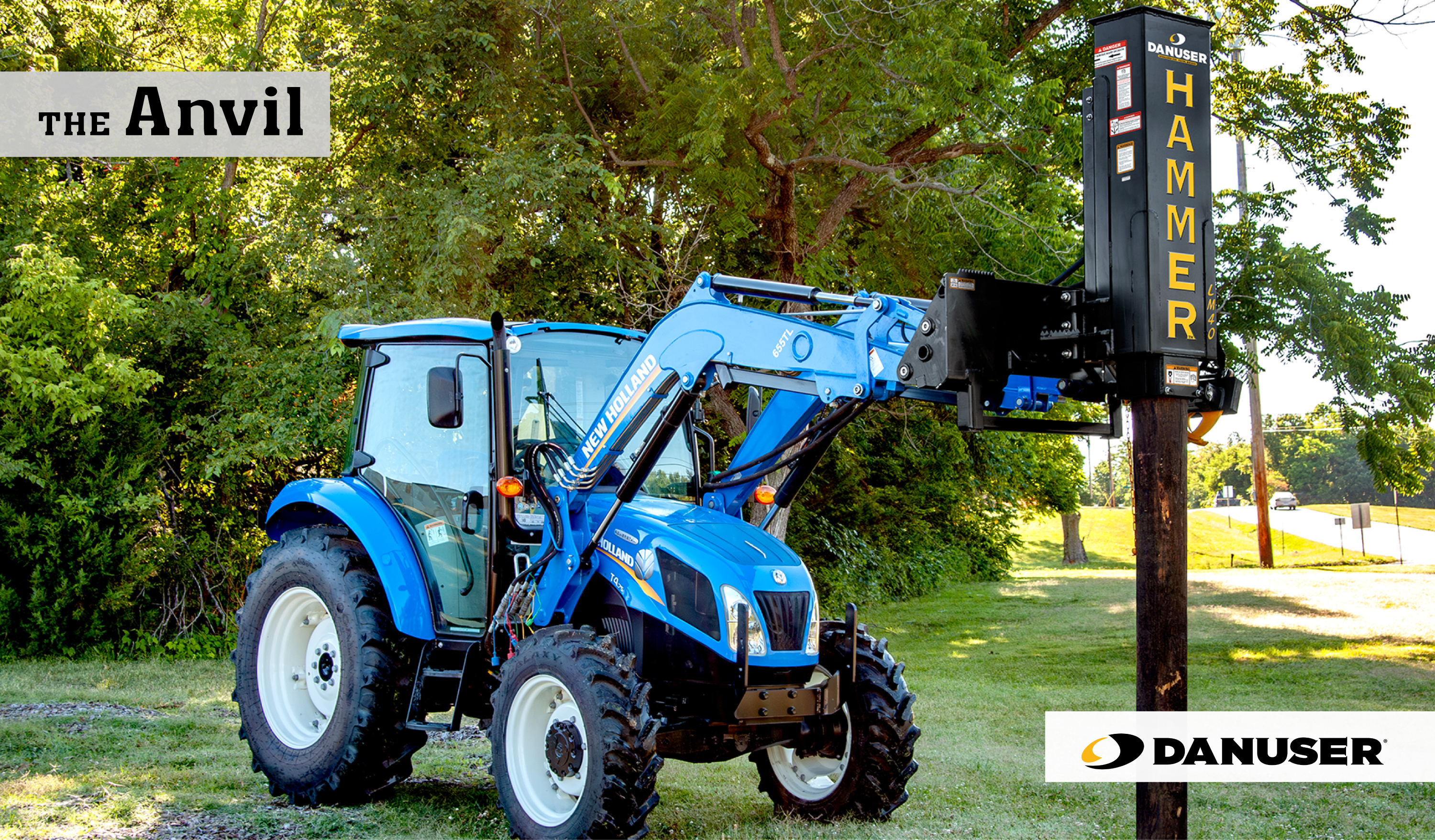
Compact tractors are incredibly versatile machines. With a loader and the right attachments, they can move dirt, handle material, clean up brush, maintain property, and tackle jobs that once required much larger equipment.
But sooner or later, many compact tractor owners discover an attachment they want to use that requires something their tractor may not have: a third hydraulic function.
If you are considering a hydraulic grapple or tree puller, or other hydraulic attachment, understanding the role of the third function valve is an important first step.
Understanding the Third Hydraulic Function
Start with the front-end loader already on your tractor. A typical loader has two hydraulic functions controlled by the loader joystick:
- Raise and lower the loader arms
- Curl and dump the bucket
Those two functions are enough for a standard bucket, pallet forks, or other attachments that don't require their own hydraulic movement.
But what happens when the attachment itself needs to move?
A grapple needs to open and close. A hydraulic tree puller needs to clamp onto the tree or post. Those operations require another hydraulic circuit.
That's the third function.
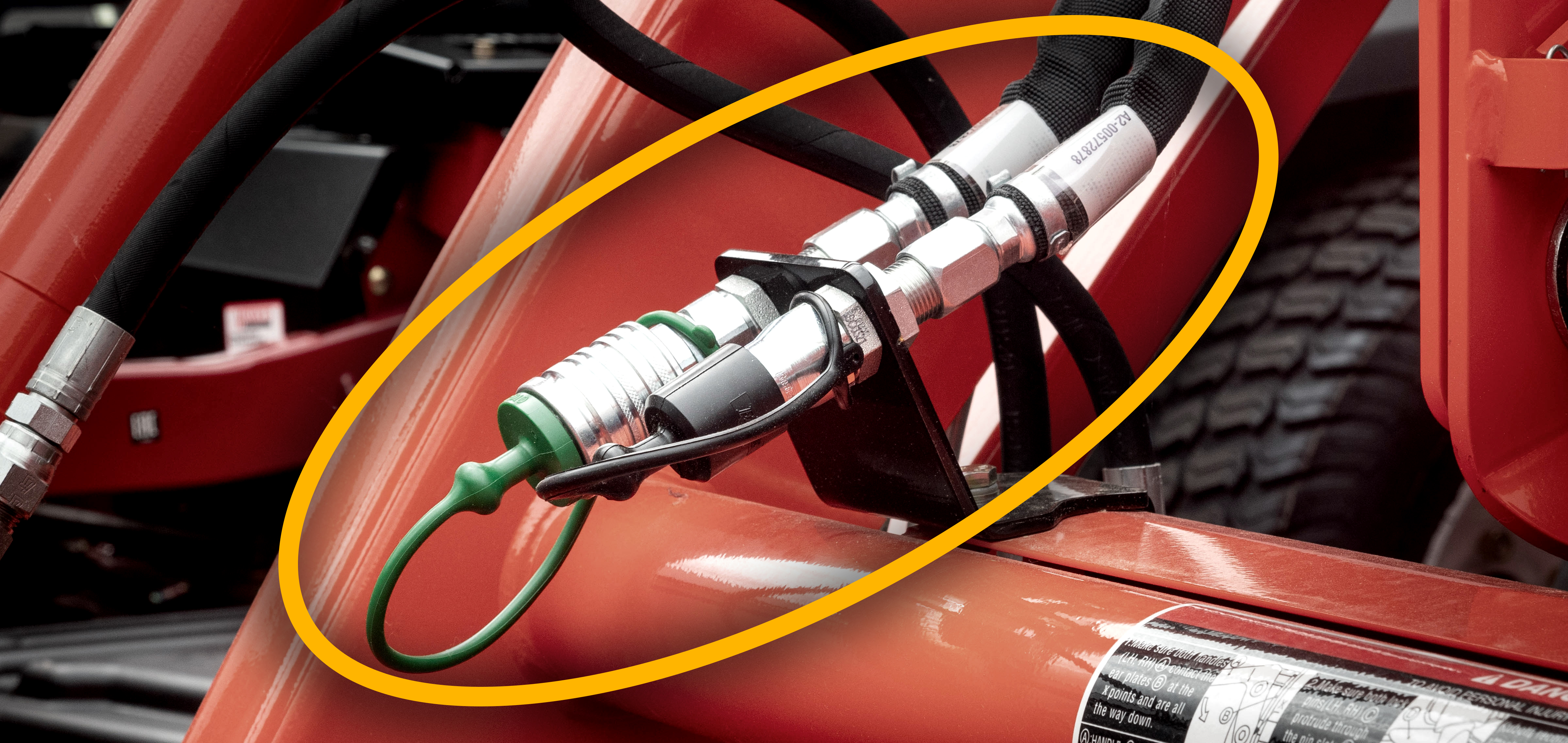
A third function valve adds another hydraulically controlled function to your loader. Hydraulic hoses typically run from the valve to a set of quick couplers mounted near the front of the loader. The hoses from your attachment connect to those couplers.
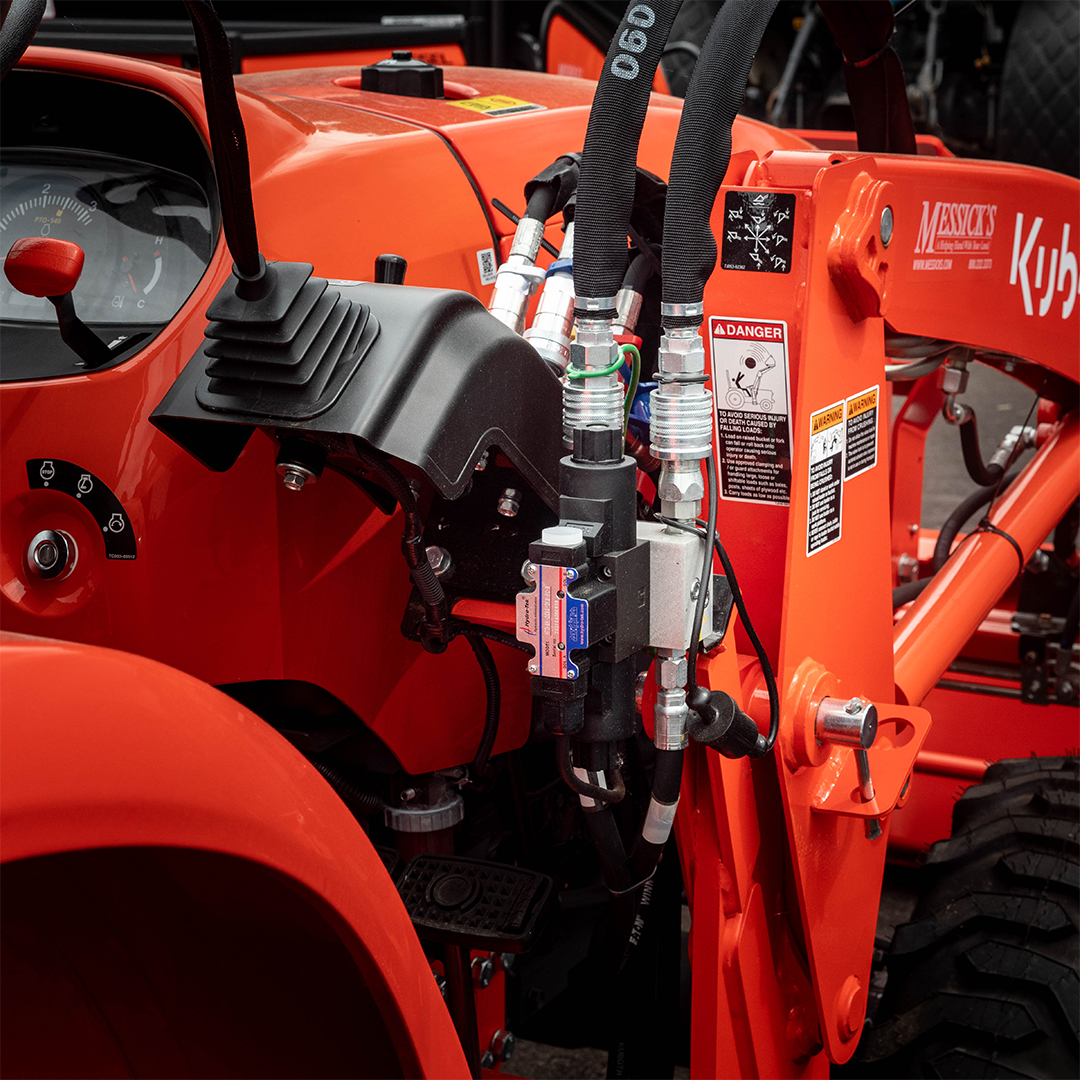
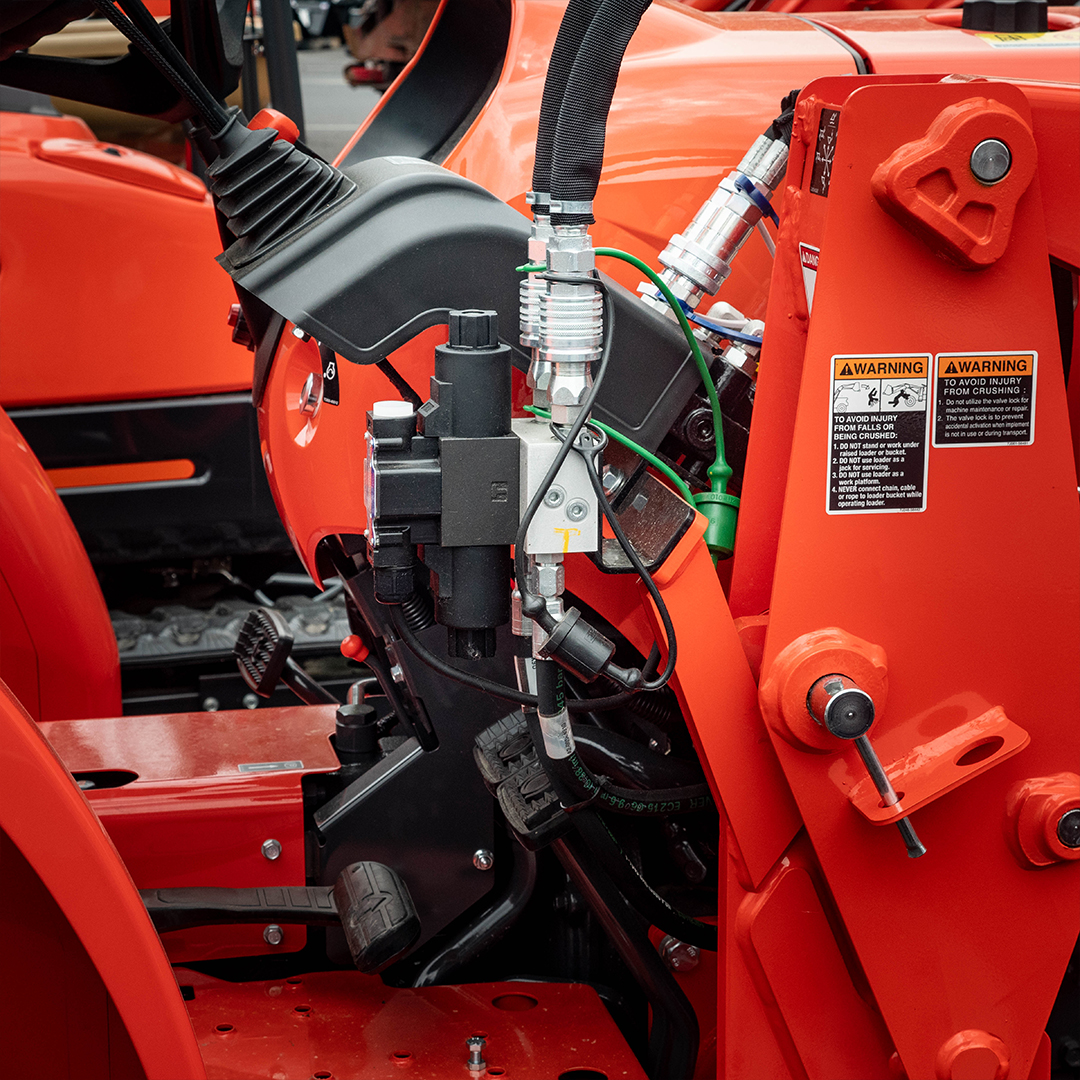
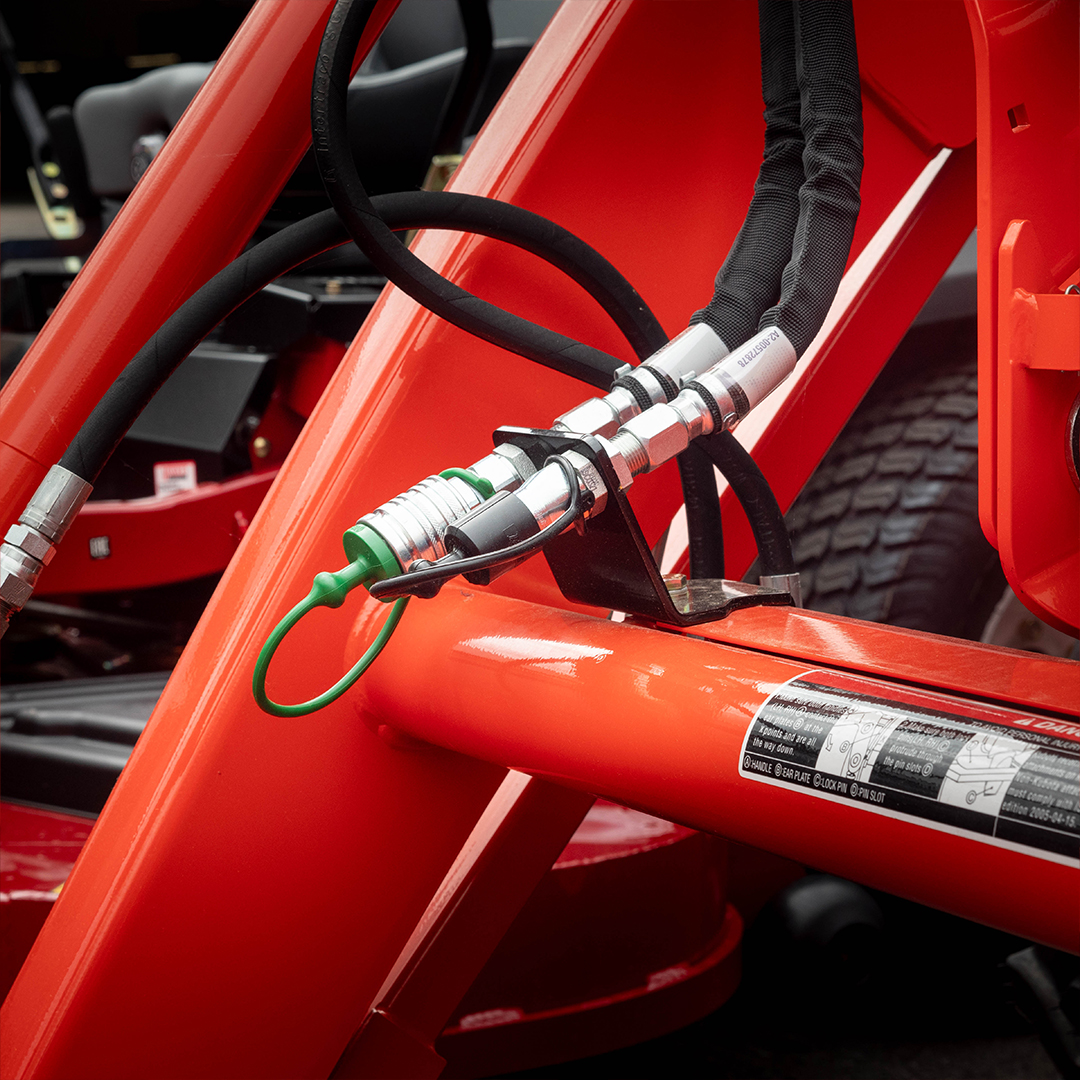
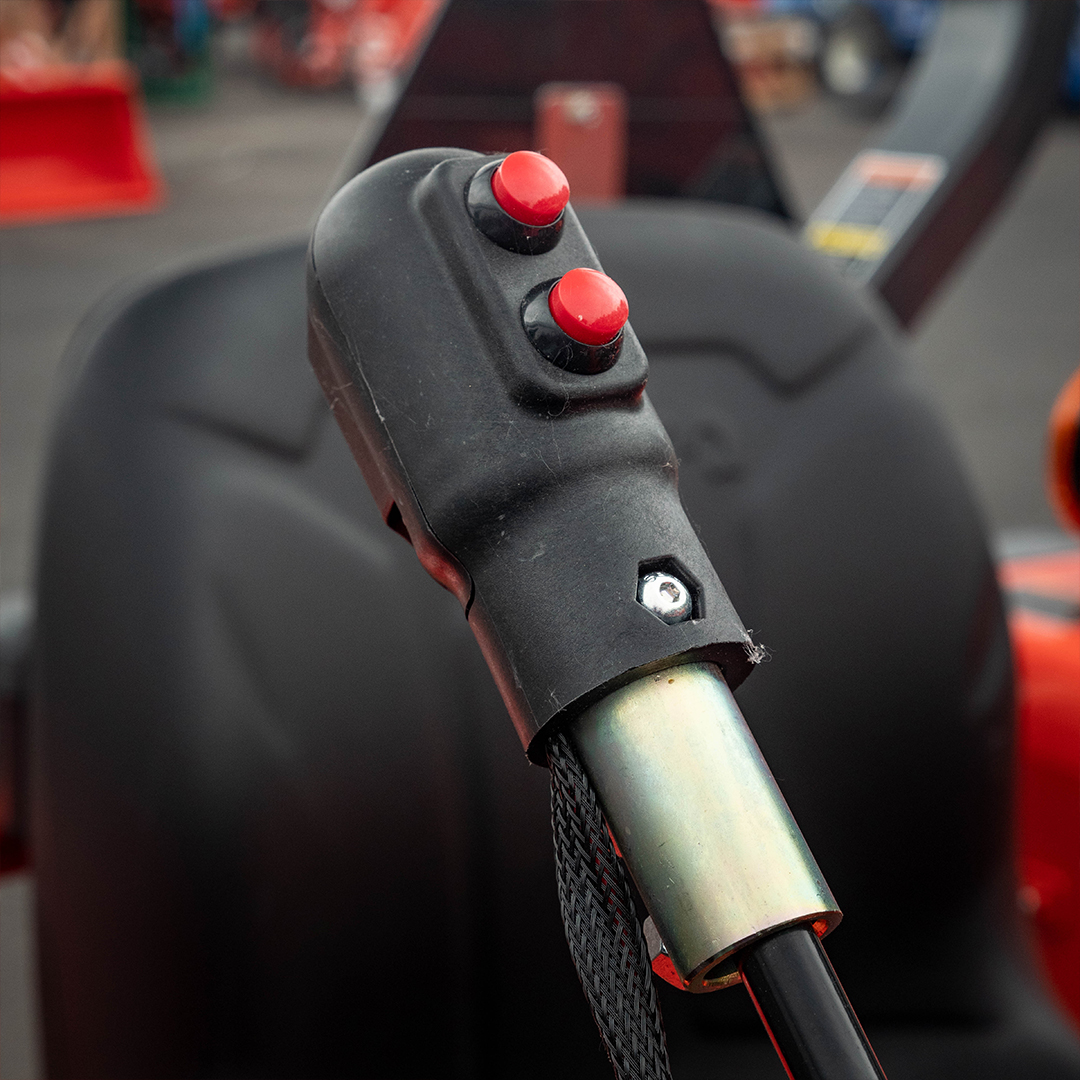
Most third function systems are electrically activated through buttons or a switch located on the loader joystick. Press one button and hydraulic fluid operates the attachment in one direction. Press the other, and it operates in the opposite direction.
The result is that you can control a hydraulic attachment while continuing to use your tractor's loader.
Does My Tractor Have a Third Function Valve?
It might.
Third function hydraulics are available from the factory on some tractor and loader combinations. They can also be added by a dealer or installed later with an aftermarket kit.
But many compact tractors were originally equipped for basic loader work. If the original owner only planned to use a bucket or pallet forks, there may have been little reason to pay for auxiliary hydraulics at the front of the loader. That can change quickly once you start looking at hydraulic attachments.
If you aren't sure whether your tractor already has auxiliary hydraulics, look near the front of the loader for an additional pair of hydraulic couplers. You may also have additional buttons or switches on the loader joystick.
Your tractor or loader manual, or the dealer who sold the machine, can confirm how it is equipped.
Third Function Valve vs. Diverter Valve?
If you begin researching auxiliary hydraulics for your tractor, you'll probably encounter another term: diverter valve. They aren't exactly the same thing.
A diverter temporarily redirects hydraulic flow from an existing loader function. When the diverter is activated, moving the joystick may operate your attachment instead of performing its normal loader function.
A true third function adds separate hydraulic control for the attachment.
That distinction can become important depending upon your tractor and how you plan to use the attachment. Ask your tractor dealer or kit manufacturer how the system operates, especially if you need to use the loader and attachment functions at the same time.
Can You Add a Third Function Valve to a Compact Tractor?
In many cases, yes.
There are factory and aftermarket third function kits available for a wide range of compact tractors. However, third function installations are tractor specific.
A typical installation may involve:
- A hydraulic valve
- Hydraulic hoses and fittings
- Front-mounted quick couplers
- Electrical wiring
- A joystick-mounted switch or replacement joystick handle
- Mounting brackets and related hardware
Exactly how the valve connects to the tractor's hydraulic system depends upon the tractor, loader, and third function kit.
Before choosing a kit, confirm that it is compatible with your particular tractor and loader.
Hydraulic Pressure and Flow Matter
Having hydraulic couplers at the front of your tractor doesn't automatically mean every hydraulic attachment is compatible.
Two specifications you'll commonly encounter are hydraulic pressure and hydraulic flow.
Hydraulic pressure, commonly expressed in pounds per square inch (PSI), is related to the amount of force the hydraulic system can produce.
Hydraulic flow, commonly expressed in gallons per minute (GPM), affects how quickly hydraulic fluid moves through the system and therefore how quickly a cylinder operates.
Always compare the requirements and limitations of the attachment, tractor, and auxiliary hydraulic system before putting an attachment into service.
Loader Compatibility Matters, Too
Hydraulics are only part of the picture. Before choosing an attachment, also review the following:
- Tractor rated lift capacity
- Attachment weight
- Mounting system
- Tractor horsepower
- Operating instructions and limitations
Attachment weight is particularly important on compact tractors because loader capability varies considerably between machines.
Before purchasing any attachment, confirm that your particular tractor and loader can safely handle it.
Before shopping for a hydraulic attachment, find out how your tractor is equipped and what your tractor and loader can handle. Understanding the hydraulic controls, attachment requirements, and loader limitations will help you ask the right questions before you buy.
Considering a hydraulic attachment for your compact tractor? Browse Danuser's lineup of post drivers, tree pullers, and other attachment solutions.